REGARDING MY PERFORMANCE
1. What were the three aspects of the assignments I've submitted that I am most proud of?
A. The unit 2 lab was a lot of fun and I felt it came out the way I had planned.
B. My ethical essay has some good points and is all based on reality.
C. By in large the whole accomplishment of the unit is something to be proud of.
2. What two aspects of my submitted assignments do I believe could have used some improvement?
A. My compendium reviews are not very interesting. I have now had trouble with them on both units. I just don’t learn well writing out my notes in an organized manner. I need to figure out a way make it less boring and a good study guide.
B. I should spend more time surfing the cool links that are provided.
3. What do I believe my overall grade should be for this unit?
A. My overall grade is up to Larry, but I would like to see a B.
4. How could I perform better in the next unit?
A. Performing better on unit 3 is similar to the past units, I will show more interest in the internet based material and try to focus on my compendiums.
REGARDING THE UNIT
At what moment during this unit did you feel most engaged with the course?
A. I was most engaged working on and writing the unit lab.
At what moment unit did you feel most distanced from the course?
A. When I was working, I felt this pressure and couldn’t do anything about it.
What action that anyone (teacher or student) took during this unit that find most affirming and helpful?
A. All of the help my crew gave me in getting all of my vitals and the pictures were great too.
What action that anyone (teacher or student) took during this unit did you find most puzzling or confusing?
A. Trying to communicate is the toughest part of the class. I have questions and didn’t know how I was doing.
What about this unit surprised you the most?
A. I was really surprised with the relationship these chapters had with my work. The general nutrition and how we try and use those same ideas in the fire house. My job is based on all of the human systems that we covered.
Friday, June 27, 2008

ETHICAL ISSUE FOR UNIT II

Food Production Issues
For this ethical issue we have been discussing how the big agriculture and packaged foods affect our society. I feel there are many factors that contribute to how this culture has gone and gotten so big. I argue that the type of society that we live in has allowed for this growth and efficiency in the production of our food.
Big population and big agriculture is the first reason that I will discuss. To sustain the populace of just this country let alone the world requires mass produced foods. The Food production for this country has gotten to be fast and efficient because the land and work force to produce natural, and community driven grown foods is more than this country want to handle. If you look at the population spread over the country you’ll see that the largest of populations are in cities and high industrial areas. They country has trade healthy food for businesses in industrial area. To supply these groups with food you have to grow and make foods that can be shipped to these areas. Shipping foods require you to add preservatives or time the growth of the croups to supply these areas. This poses a problem for the larger communities if there comes a time that foods can’t be shipped.
Lazy cultures have allowed for this kind of food production to continue to grow. People have been trying to make a fortune in this country since it began and as the opportunity has grown to make money the lack of interest in their health has diminished. As people became more specific in their trades or passions it has left few to make advancements in producing foods for the masses, not interested in growing it them selves. When a society is so driven in make a profit they tend to rely on someone to feed them. When that same person trying to feed everybody is also trying to make a profit the quality and quantity of foods will be dictated by that business. That’s why so much of the food is prepackaged and has a poor nutritional value.
Society has also made it a trend to go out and spoil ones self with fancy dinners or a quick bite mid day. If it was cool and easy to go out to you r garden or pasture and get your food everybody would be doing it, and striving to do it. We have become so focused on status that we have traded health for cultural status. If kids these days were more interested on how to irrigate a garden instead of irrigating their minds with video games, there might be a change in the way we view our food production industry in the future. It is just too easy to go and get fast food and get back to those trendy things that make you feel good about yourself.
Ultimately I see no change in the future of food production even with the big green trend and the emphasis of global warming. People just don’t care that much about how their food consumption is affect the future generations of this plant, or their fellow creatures. I think in the long run you are going to see a large number of the population dying off due to starvation, and only the wealth will survive, or those that know how to get their own food. The numbers on people that I think could really survive a mass food loss is small. That is probably a good thing for the planet, Mother Nature always gets through those problem times that the animals that inhabit her don’t. So, with the current populations, and focus on cultural status the cheap and easy way for food production is going to continue down the same path as it has been going.
Big population and big agriculture is the first reason that I will discuss. To sustain the populace of just this country let alone the world requires mass produced foods. The Food production for this country has gotten to be fast and efficient because the land and work force to produce natural, and community driven grown foods is more than this country want to handle. If you look at the population spread over the country you’ll see that the largest of populations are in cities and high industrial areas. They country has trade healthy food for businesses in industrial area. To supply these groups with food you have to grow and make foods that can be shipped to these areas. Shipping foods require you to add preservatives or time the growth of the croups to supply these areas. This poses a problem for the larger communities if there comes a time that foods can’t be shipped.
Lazy cultures have allowed for this kind of food production to continue to grow. People have been trying to make a fortune in this country since it began and as the opportunity has grown to make money the lack of interest in their health has diminished. As people became more specific in their trades or passions it has left few to make advancements in producing foods for the masses, not interested in growing it them selves. When a society is so driven in make a profit they tend to rely on someone to feed them. When that same person trying to feed everybody is also trying to make a profit the quality and quantity of foods will be dictated by that business. That’s why so much of the food is prepackaged and has a poor nutritional value.
Society has also made it a trend to go out and spoil ones self with fancy dinners or a quick bite mid day. If it was cool and easy to go out to you r garden or pasture and get your food everybody would be doing it, and striving to do it. We have become so focused on status that we have traded health for cultural status. If kids these days were more interested on how to irrigate a garden instead of irrigating their minds with video games, there might be a change in the way we view our food production industry in the future. It is just too easy to go and get fast food and get back to those trendy things that make you feel good about yourself.
Ultimately I see no change in the future of food production even with the big green trend and the emphasis of global warming. People just don’t care that much about how their food consumption is affect the future generations of this plant, or their fellow creatures. I think in the long run you are going to see a large number of the population dying off due to starvation, and only the wealth will survive, or those that know how to get their own food. The numbers on people that I think could really survive a mass food loss is small. That is probably a good thing for the planet, Mother Nature always gets through those problem times that the animals that inhabit her don’t. So, with the current populations, and focus on cultural status the cheap and easy way for food production is going to continue down the same path as it has been going.
Lab Project Unit 2 - Exercise Physiology

 Exercise Physiology
The unit 2 lab will show the differing metabolic rates during different activities that an AZ fire fighter might have during a basic shift. This lab will give a hypothesis, collect data, analyze that data, reconiize problems with the data and come to a conclusion.
The hypothesis for this lab is based on activities during a day at work. The question of a greater metabolic difference between the tones from alarm room or the actual fire calls has always interested me. I hypothesis that there will be an increase as each activity get more physically and mentally demanding.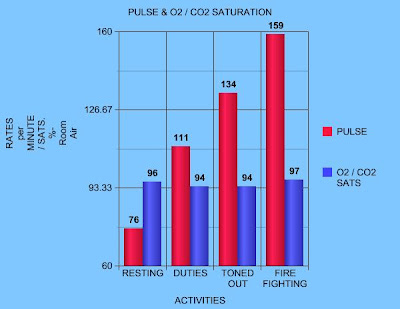
The normal shift of a fire fighter starts at 0800 and continues for 24 hrs. During that time a fire fighter can have many different activities that they might perform. For this lab the four activities used will be a resting period, daily duties or work, being toned out for a call, and actual fire attack. The test subject will be an adult male, 28 years of age, weighting 185 pounds, in general good health.
The resting data will be collected during a resting period or safety break at approximately 1300. During that time the body can recover from calls or prepare for night calls. The metabolic rate at this time should be normal to low as to no extra energy is being required to work or think.
Duties around the fire house tend to be physically, yet still relaxing, and require more energy then resting. Duties like wash the fire trucks, mopping the bay floors, landscaping, and general cleaning can cause your body to increase its metabolic rate. The physical part of duties are not to challenging, but the mental part of trying to keep yourself interested in what your doing will affect it. That why fire fighters fool around so much.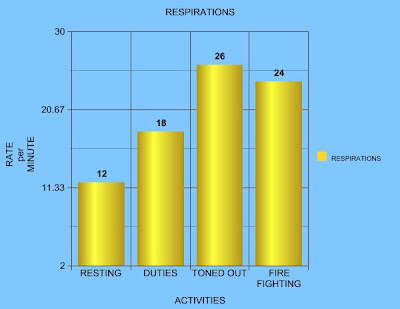
Tones happen during the day at an unknown time. This is a bit of an alarm and surprise so the body will have to increases its metabolism. This increase is to supply the body with its need oxygen and nutrients to go from a stand still to a rush. The demand on the body can increase when getting the gear on, and also the need mental capacity to make the right decisions on the incident start with the tones. That rush will become a greater demand when the tones are for a fire.
Fire fighting happens on rare occasion, but when it does the physical and mental requirements increase exponentially, you will see a major release of endorphins in response to the sympathetic nervous system. During that time, metabolic rate has become increasingly faster trying to match the demand of the cellular requirements. The results will be a pulse rate increase to supply the body with blood. The blood pressure increases to supply the tissues with oxygen and nutrients required to sustain aerobic metabolism. Respiratory rate also increases to supply the demand of oxygen on the heart, brain, and body. With the increased respiratory rate the body can also rid its self of carbondioxide and other by products in the blood stream.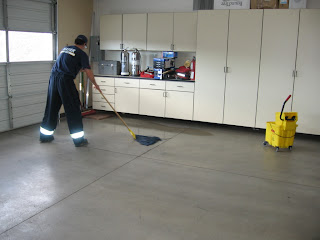
The data was collected for this lab at the fire station that I work at. I was able to use the tools and medical equipment to collect detailed vitals on myself with the help of the crew. The ECG monitor was used for my vitals, it has a Bp cuff and pulse oximetry, I also was hooked up to the ECG and was able to see the change of my heart rhythms. They took pictures during different process, and times of the day. The resting, duties, tones data was collected at the actual times during the shift that they happened. Unfortunately, there were no fires during the shift, but we drill. During the daily drill evolutions I was able to simulate the activates of fire ground operations. We practice like we play, so it is very accurate, other then the mental component.
The hypothesis for this lab is based on activities during a day at work. The question of a greater metabolic difference between the tones from alarm room or the actual fire calls has always interested me. I hypothesis that there will be an increase as each activity get more physically and mentally demanding.

The normal shift of a fire fighter starts at 0800 and continues for 24 hrs. During that time a fire fighter can have many different activities that they might perform. For this lab the four activities used will be a resting period, daily duties or work, being toned out for a call, and actual fire attack. The test subject will be an adult male, 28 years of age, weighting 185 pounds, in general good health.
The resting data will be collected during a resting period or safety break at approximately 1300. During that time the body can recover from calls or prepare for night calls. The metabolic rate at this time should be normal to low as to no extra energy is being required to work or think.
Duties around the fire house tend to be physically, yet still relaxing, and require more energy then resting. Duties like wash the fire trucks, mopping the bay floors, landscaping, and general cleaning can cause your body to increase its metabolic rate. The physical part of duties are not to challenging, but the mental part of trying to keep yourself interested in what your doing will affect it. That why fire fighters fool around so much.

Tones happen during the day at an unknown time. This is a bit of an alarm and surprise so the body will have to increases its metabolism. This increase is to supply the body with its need oxygen and nutrients to go from a stand still to a rush. The demand on the body can increase when getting the gear on, and also the need mental capacity to make the right decisions on the incident start with the tones. That rush will become a greater demand when the tones are for a fire.
Fire fighting happens on rare occasion, but when it does the physical and mental requirements increase exponentially, you will see a major release of endorphins in response to the sympathetic nervous system. During that time, metabolic rate has become increasingly faster trying to match the demand of the cellular requirements. The results will be a pulse rate increase to supply the body with blood. The blood pressure increases to supply the tissues with oxygen and nutrients required to sustain aerobic metabolism. Respiratory rate also increases to supply the demand of oxygen on the heart, brain, and body. With the increased respiratory rate the body can also rid its self of carbondioxide and other by products in the blood stream.
The data was collected for this lab at the fire station that I work at. I was able to use the tools and medical equipment to collect detailed vitals on myself with the help of the crew. The ECG monitor was used for my vitals, it has a Bp cuff and pulse oximetry, I also was hooked up to the ECG and was able to see the change of my heart rhythms. They took pictures during different process, and times of the day. The resting, duties, tones data was collected at the actual times during the shift that they happened. Unfortunately, there were no fires during the shift, but we drill. During the daily drill evolutions I was able to simulate the activates of fire ground operations. We practice like we play, so it is very accurate, other then the mental component.


The conclusion of this lab follows my hypothesis right on. All of the activities are increasingly more demanding on the body so it will have to increase its metabolism. I was hoping for a more drastic change with the vitals on being toned out to a call. The fact that I was not toned out to a fire and just general medical calls might have something to do with it. The calls at night also were a bit more demanding then those during the day, the vitals were a bit higher across the board. I wonder if getting up in the middle of the night consistently over the year affects your metabolism poorly. This lab was fun and I got my crew involved with my education, so they learned a bit too.
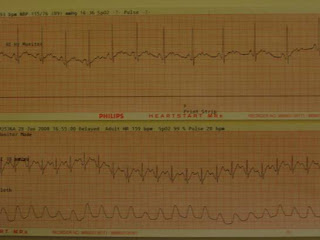 These ECG strips shows my heart rate and rhythm. The top strip is my heart during rest, a normal sinus rhythm. The bottom strip is after extreme physical out put, sinus tachycardia. The higher my cardiac output is the smaller and narrower the waves get. This shows how my heart is working to keep up with the metabolic demand of my body. The increase pulse rate will increase my B/P and require high oxygen intake, increasing respirations.
These ECG strips shows my heart rate and rhythm. The top strip is my heart during rest, a normal sinus rhythm. The bottom strip is after extreme physical out put, sinus tachycardia. The higher my cardiac output is the smaller and narrower the waves get. This shows how my heart is working to keep up with the metabolic demand of my body. The increase pulse rate will increase my B/P and require high oxygen intake, increasing respirations.Nutrition - Compendium 4

Chapter 8
Table of Content
The Digestive Tract
Overview
Stomach Small intestine
Large Intestine
Accessory Organs
Nutrition and Weight
The Digestive Tract
The process of digestion has four parts, ingestion, digestion, absorption, elimination.
The process starts in the mouth were chewing a mechanical digestion starts to break down the food.
The food travels down the esophagus and into the stomach. The stomach mixes in acidic juices to break down the food more. The food mass moves into the small intestines were more juices are introduced breaking down the mass for absorption. Nutrients are absorbed by the walls of the small intestine.
The large intestine absorbs the last bit of water and vitamins out of the feces; the large intestine is responsible for carrying out waste.
Accessory organs that play a part in the digestion process are pancreas liver, and gallbladder.
The pancrease produces juices that dissolve proteins, carbohydrates, fats.
The liver is the body’s main filter; it takes out old blood cells and other waste out of the blood stream. I stores and breaks down glycogen, for glucose use.
Nutrition and Weight
The essential amino acids, proteins, carbohydrates, fats all play a role in the balance diet. Carbohydrates break down into glucose for energy, but simple sugars tend to be stored as glycogen and lipids. The simple absorption of the sugars cause a fast release of insulin and over time can cause diabetes. Proteins supply the amino acid used. Fatty acid come in two types saturated and unsaturated. Unsaturated fatty acids can help cardiovascular systems, while saturated usually causes poor heart out put.
Nutrition: Onlin Lab

1. How healthy a daily diet do you think this is? Why?
This is a very poor diet, and I should be embarrassed. It just so happened that the day I did this Lab I was working on a job site and short on cash. It is very convenient and quick to run to Del Taco and grab a combo. The food is okay but I know it is bad for me. That night I went out with a friend and Alfonso’s sounded good. The overall caloric intake for that day is way over what my norm intake should be.
2. What would you change about this day's eating, if anything?
I would have to change all of it. The issue is poor planning on my part and I didn’t pack a lunch to take with me. I have healthier food at home and just need to prepare before I go to work. That night was a treat for me and I could have eaten better at home. When you think about the food and look at the charts and the nutrition guides it is kind of disgusting.
3. Do you find this kind of nutritional tracking helpful? Why or why not?
Like the main issue of a poor diet, the nutritional guide is just an inconvenience if you don’t plan on setting time aside to use it. It can be very helpful in managing your diet and I would like to try and use it in the future. Shopping for the health foods is another scheduling issue and just needs some proper planning as well.
This is a very poor diet, and I should be embarrassed. It just so happened that the day I did this Lab I was working on a job site and short on cash. It is very convenient and quick to run to Del Taco and grab a combo. The food is okay but I know it is bad for me. That night I went out with a friend and Alfonso’s sounded good. The overall caloric intake for that day is way over what my norm intake should be.
2. What would you change about this day's eating, if anything?
I would have to change all of it. The issue is poor planning on my part and I didn’t pack a lunch to take with me. I have healthier food at home and just need to prepare before I go to work. That night was a treat for me and I could have eaten better at home. When you think about the food and look at the charts and the nutrition guides it is kind of disgusting.
3. Do you find this kind of nutritional tracking helpful? Why or why not?
Like the main issue of a poor diet, the nutritional guide is just an inconvenience if you don’t plan on setting time aside to use it. It can be very helpful in managing your diet and I would like to try and use it in the future. Shopping for the health foods is another scheduling issue and just needs some proper planning as well.
Oxygen/Microbes/Immunity - Compendium 3

Table of Content
Chapter 5
Cardiovascular System
Heart
Vessels
Blood Vessels
Arteries
Veins
Capillaries
Pumping Blood
Left side
Right side
Heart beat
Pulse
Blood pressure
Left side
Right side
Heart beat
Pulse
Blood pressure
Pathways
Capillaries Exchange
Capillary pressures
Capillaries Exchange
Capillary pressures
Lymphatic system
Cardiovascular Disorders
Disease
Hypertension
Diet
Chapter 6
Blood
Function
Red Blood Cells
Function
O2 transport
White Blood Cells
Function
Granular Leukocytes
Angranular Leukocytes
Disease
Hypertension
Diet
Chapter 6
Blood
Function
Red Blood Cells
Function
O2 transport
White Blood Cells
Function
Granular Leukocytes
Angranular Leukocytes
Blood Clotting
Platelets
Clotting
Blood Typing
Grouping
Type A
Type B
Type AB
Type O
Agglutination
RH Groups
Homeostasis
Systems working together
Chapter 7
Microbes and Pathogens
Bacteria
Viruses
Lymphatic System
Primary Organs
Secondary Organs
Defenses
Nonspecific
Specific
B cells
T cells
Chapter 5
Cardiovascular System
The cardiovascular system is made up of the heart and blood vessels.
The heart pumps the blood through out the body in the blood vessels. The blood vessels carry need nutrients and gases to the capillary beds were exchange of fresh nutrients and gasses are taken by cells and used while waste is taken away and removed from the blood stream.
Blood Vessels
Arteries are thicker walled vessels that carry blood under higher pressure away from the heart.
Veins carry blood towards the heart under low pressure, using valves to keep blood flowing in one direction.
Capillaries are the smallest vessels were blood nutrients are exchanged for waste in between arteries and veins.
Pumping Blood
The heart pumps blood through out the body by using the left and right side of its structure.
Blood enters the heart into the right atrium and pass through the tricuspid valve into the right ventricle. The right ventricle pumps blood through the pulmonic valve into the pulmonary system to rid the red blood cells of its CO2 in exchange for fresh O2. The blood returns to the heart through the left atrium and passes through the bicuspid valve into the left ventricle. The left ventricle pumps blood through the aortic valve and into the body under Pressure that is measured in millimeters of mercury.
The heart is stimulated by two nodes that cause it to contract. The Sinoatrial node (SA) starts off contracting the atriums and sending the pace to the Atrioventricular node (AV). The AV node causes the ventricles to contract.
The pulse is the rate the heart beats at.
Blood pressure is the measurement of the blood against the walls of the vessels during contraction (systolic) and during rest (diastolic).
Blood flow is under pressure in the arteries until it reaches the capillaries, it then losses it velocity for nutrient and waste exchange. The blood flows into the veins at lower pressure returning to the heart.
The cardiovascular pathways are broken into two circuits. The pulmonary circuit is blood flowing to the lungs for O2 exchange. The systemic circuit is blood flowing through out the body to all of the organs and cells.
Capillary Exchange
The arterial end of the capillaries the greater pressure causes water to leave the capillaries due to lower osmotic pressure. Osmotic pressure is greater on the venous end which allows the water to enter the capillaries. The water is picked up into the lymphatic system and returned to the blood on the venous side.
Cardiovascular Disorders
Cardiovascular disease in the number one cause in death in western countries. With atherosclerosis and hypertension causing stroke and heart attacks or vascular aneurysms. Keeping a health diet and exercising regularly can prevent heart disease.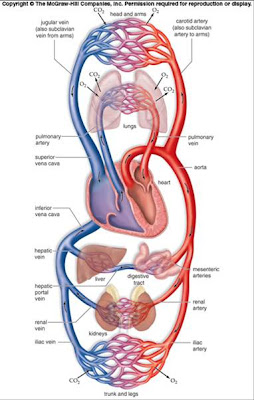
Chapter 6
Blood
The function of blood is to transport nutrients, hormones, O2 to cells. Transport waste and CO2 from cells, fight and rid body of infections. Regulate body tempature, and control PH balance.
The plasma that makes up is 91% H2O, and is produced in the liver. Plasma regulates Osmotic pressure, transports and helps with clotting factors in vessels.
Red Blood Cells (RBC’s)
The release of erythropoietin causes the production of RBC’s.
The main function of RBC’s is transport of O2.
White Blood Cells (WBC’s)
WBC’s function is to combat disease.
Granular Leukocytes respond first to infection, sucking up unwanted substances.
Agranular Leukocytes are larger WBC’s and are for specific immunity
WBC’s have a life span of about 120 days
Blood Clotting
A platelets function is in clotting and come from red bone marrow.
Platelets and proteins in plasma combine creating fibrin threads which trap RBC’s and cause the clotting and blood stop.
Blood Typing
Determining the ABO group or presence or lack of different antigens.
Type A- Surface A, anti B antibodies
Type B- Surface B, anti A antibodies
Type AB- neither anti A or anti B antibodies, both A, B surface antigens
Type O- neither A, B surface antigens, both anti A, B antibodies
Agglutination- putting corresponding antigens and antibodies together
Homeostasis
This is very important with the cardiovascular system because it take make factors for the system to run smoothly. The heart just doesn’t need to pump the blood but the pulmonary system needs to provide the right amount of O2 and CO2 exchange. The digestive system needs to provide the proper nutrients, and the nervous and endocrine system needs to control the blood pressures to move the blood through out the body.
Microbes and Pathogens
Bacteria are cells the reproduce independently of possible host cells. The produce toxins and can reproduce inside of a host cell.
Viruses are proteins coated and cause a host cell to reproduce with their genetic code by taking over the cell. The new cells emerge with viral diseases which are tuff to combat.
Lymphatic System
Lymphatic vessels connect the system to the circulatory system.
The primary organs are the red bone marrow that makes the B cell, and the thymus glands were the T cells are made.
The secondary organs are the lymph nodes the clean waste out of the lymph, and the spleen that cleans the blood of debris.
Defenses
Two types of defense.
NON specific
Barriers and protective protein.
The inflammatory reaction.
SPECIFIC
B Cells and T Cells are the body’s defense to foreign and abnormal molecules.
T cells actually go out and destroy the cells.
B cells mark the cells or foreign cells to be recognized and destroyed.
Platelets
Clotting
Blood Typing
Grouping
Type A
Type B
Type AB
Type O
Agglutination
RH Groups
Homeostasis
Systems working together
Chapter 7
Microbes and Pathogens
Bacteria
Viruses
Lymphatic System
Primary Organs
Secondary Organs
Defenses
Nonspecific
Specific
B cells
T cells
Chapter 5
Cardiovascular System
The cardiovascular system is made up of the heart and blood vessels.
The heart pumps the blood through out the body in the blood vessels. The blood vessels carry need nutrients and gases to the capillary beds were exchange of fresh nutrients and gasses are taken by cells and used while waste is taken away and removed from the blood stream.
Blood Vessels
Arteries are thicker walled vessels that carry blood under higher pressure away from the heart.
Veins carry blood towards the heart under low pressure, using valves to keep blood flowing in one direction.
Capillaries are the smallest vessels were blood nutrients are exchanged for waste in between arteries and veins.
Pumping Blood
The heart pumps blood through out the body by using the left and right side of its structure.
Blood enters the heart into the right atrium and pass through the tricuspid valve into the right ventricle. The right ventricle pumps blood through the pulmonic valve into the pulmonary system to rid the red blood cells of its CO2 in exchange for fresh O2. The blood returns to the heart through the left atrium and passes through the bicuspid valve into the left ventricle. The left ventricle pumps blood through the aortic valve and into the body under Pressure that is measured in millimeters of mercury.
The heart is stimulated by two nodes that cause it to contract. The Sinoatrial node (SA) starts off contracting the atriums and sending the pace to the Atrioventricular node (AV). The AV node causes the ventricles to contract.
The pulse is the rate the heart beats at.
Blood pressure is the measurement of the blood against the walls of the vessels during contraction (systolic) and during rest (diastolic).
Blood flow is under pressure in the arteries until it reaches the capillaries, it then losses it velocity for nutrient and waste exchange. The blood flows into the veins at lower pressure returning to the heart.
The cardiovascular pathways are broken into two circuits. The pulmonary circuit is blood flowing to the lungs for O2 exchange. The systemic circuit is blood flowing through out the body to all of the organs and cells.
Capillary Exchange
The arterial end of the capillaries the greater pressure causes water to leave the capillaries due to lower osmotic pressure. Osmotic pressure is greater on the venous end which allows the water to enter the capillaries. The water is picked up into the lymphatic system and returned to the blood on the venous side.
Cardiovascular Disorders
Cardiovascular disease in the number one cause in death in western countries. With atherosclerosis and hypertension causing stroke and heart attacks or vascular aneurysms. Keeping a health diet and exercising regularly can prevent heart disease.

Chapter 6
Blood
The function of blood is to transport nutrients, hormones, O2 to cells. Transport waste and CO2 from cells, fight and rid body of infections. Regulate body tempature, and control PH balance.
The plasma that makes up is 91% H2O, and is produced in the liver. Plasma regulates Osmotic pressure, transports and helps with clotting factors in vessels.
Red Blood Cells (RBC’s)
The release of erythropoietin causes the production of RBC’s.
The main function of RBC’s is transport of O2.
White Blood Cells (WBC’s)
WBC’s function is to combat disease.
Granular Leukocytes respond first to infection, sucking up unwanted substances.
Agranular Leukocytes are larger WBC’s and are for specific immunity
WBC’s have a life span of about 120 days
Blood Clotting
A platelets function is in clotting and come from red bone marrow.
Platelets and proteins in plasma combine creating fibrin threads which trap RBC’s and cause the clotting and blood stop.
Blood Typing
Determining the ABO group or presence or lack of different antigens.
Type A- Surface A, anti B antibodies
Type B- Surface B, anti A antibodies
Type AB- neither anti A or anti B antibodies, both A, B surface antigens
Type O- neither A, B surface antigens, both anti A, B antibodies
Agglutination- putting corresponding antigens and antibodies together
Homeostasis
This is very important with the cardiovascular system because it take make factors for the system to run smoothly. The heart just doesn’t need to pump the blood but the pulmonary system needs to provide the right amount of O2 and CO2 exchange. The digestive system needs to provide the proper nutrients, and the nervous and endocrine system needs to control the blood pressures to move the blood through out the body.
Microbes and Pathogens
Bacteria are cells the reproduce independently of possible host cells. The produce toxins and can reproduce inside of a host cell.
Viruses are proteins coated and cause a host cell to reproduce with their genetic code by taking over the cell. The new cells emerge with viral diseases which are tuff to combat.
Lymphatic System
Lymphatic vessels connect the system to the circulatory system.
The primary organs are the red bone marrow that makes the B cell, and the thymus glands were the T cells are made.
The secondary organs are the lymph nodes the clean waste out of the lymph, and the spleen that cleans the blood of debris.
Defenses
Two types of defense.
NON specific
Barriers and protective protein.
The inflammatory reaction.
SPECIFIC
B Cells and T Cells are the body’s defense to foreign and abnormal molecules.
T cells actually go out and destroy the cells.
B cells mark the cells or foreign cells to be recognized and destroyed.
B/P Online Lab
The Blood pressure Lab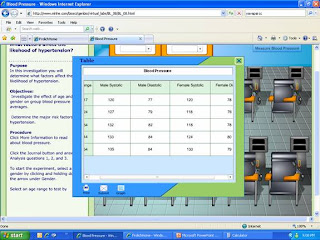
1. State a problem about the relationship of age and gender to blood pressure.
There are many factors that are related to blood pressure. The most prevalent and often the one that can’t be controlled, is heredity.
2. Use your knowledge about the heart and the circulatory system to make a hypothesis about how the average blood pressure for a group of people would be affected by manipulating the age and gender of the group members.
Blood Pressure (B/P) can be manipulated in males and females just by the genetic that they inherit. A person will also inherit their height and weight to a point which can affect B/P. With ones physical traits they might be more or less prone to exercise, which will affect the efficiency of their circulatory system. Those that don’t exercise tend to have a poor diet and might have increased sodium levels affecting their B/P. Age in both genders will affect the blood pressure also; as the body gets older the vessels lose their elasticity and can’t help regulate B/P. In younger ages the circulator system works more efficient and there is less B/P problems.
3. How will you use the investigation screen to test your hypothesis? What steps will you follow? What data will you record?
The steps that I will use will be orderly, starting with one gender and moving through the age group. As I move through the age groups I will key in on increased B/P, heredity and poor health by lack of exercise and sodium intake.
4. Analyze the result of your experiment. Explain any patterns you observed.
General B/P issues began to start in the older age groups, in both genders. With the increased age the weight and lack of exercise started becoming prevalent. In females I also noticed those same people had increased sodium levels. Heredity played some part in certain people but not as much as I thought it would have.
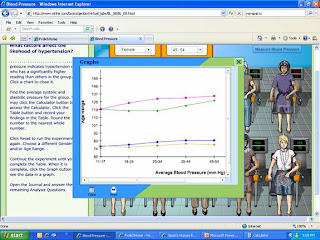
5. Did the result of your experiment support your hypothesis? Why or why not? Based on your experiment what conclusion can you draw about the relationship of age and gender to group blood pressure averages?
I don’t think so; I found that heredity took back seat to weight and poor exercise habits. In females the weight played a big part and with males the lack of exercise and poor weight played a part. Both genders had heredity hypertension playing a part. As age increased these factors became more prevalent.
6. During the course of your experiment, did you obtain any blood pressure reading that were outside of the normal range for the group being tested? What did you notice on the medical charts for these individuals that might explain their high reading?
Yes as the age groups got older the B/P’s consistently got out of normal range. Only in a few cases, but it was enough to be noticed. Those people tended to be in poor shape and had increased weight, plus some heredity.
7. List risk factors associated with the hypertension. Based on your observation, which risk factor do you think is most closely associated with hypertension?
The weight of people and their medical history.
8. What effect might obesity have on blood pressure? Does obesity alone cause a person to be at risk for high blood pressure? What other factors, in combination with obesity, might increase a person's risk for high blood pressure?
General cardiac out put is affected due the weight that the heart and body have to support. The lack of exercise due to the weight, and poor eating habits which cause the increased weight play a role in hypertension. Other diseases that cause or affect B/P such as diabetes are seen in over weight people, and can cause poor health with risk of high B/P.

1. State a problem about the relationship of age and gender to blood pressure.
There are many factors that are related to blood pressure. The most prevalent and often the one that can’t be controlled, is heredity.
2. Use your knowledge about the heart and the circulatory system to make a hypothesis about how the average blood pressure for a group of people would be affected by manipulating the age and gender of the group members.
Blood Pressure (B/P) can be manipulated in males and females just by the genetic that they inherit. A person will also inherit their height and weight to a point which can affect B/P. With ones physical traits they might be more or less prone to exercise, which will affect the efficiency of their circulatory system. Those that don’t exercise tend to have a poor diet and might have increased sodium levels affecting their B/P. Age in both genders will affect the blood pressure also; as the body gets older the vessels lose their elasticity and can’t help regulate B/P. In younger ages the circulator system works more efficient and there is less B/P problems.
3. How will you use the investigation screen to test your hypothesis? What steps will you follow? What data will you record?
The steps that I will use will be orderly, starting with one gender and moving through the age group. As I move through the age groups I will key in on increased B/P, heredity and poor health by lack of exercise and sodium intake.
4. Analyze the result of your experiment. Explain any patterns you observed.
General B/P issues began to start in the older age groups, in both genders. With the increased age the weight and lack of exercise started becoming prevalent. In females I also noticed those same people had increased sodium levels. Heredity played some part in certain people but not as much as I thought it would have.
5. Did the result of your experiment support your hypothesis? Why or why not? Based on your experiment what conclusion can you draw about the relationship of age and gender to group blood pressure averages?
I don’t think so; I found that heredity took back seat to weight and poor exercise habits. In females the weight played a big part and with males the lack of exercise and poor weight played a part. Both genders had heredity hypertension playing a part. As age increased these factors became more prevalent.
6. During the course of your experiment, did you obtain any blood pressure reading that were outside of the normal range for the group being tested? What did you notice on the medical charts for these individuals that might explain their high reading?
Yes as the age groups got older the B/P’s consistently got out of normal range. Only in a few cases, but it was enough to be noticed. Those people tended to be in poor shape and had increased weight, plus some heredity.
7. List risk factors associated with the hypertension. Based on your observation, which risk factor do you think is most closely associated with hypertension?
The weight of people and their medical history.
8. What effect might obesity have on blood pressure? Does obesity alone cause a person to be at risk for high blood pressure? What other factors, in combination with obesity, might increase a person's risk for high blood pressure?
General cardiac out put is affected due the weight that the heart and body have to support. The lack of exercise due to the weight, and poor eating habits which cause the increased weight play a role in hypertension. Other diseases that cause or affect B/P such as diabetes are seen in over weight people, and can cause poor health with risk of high B/P.
Subscribe to:
Posts (Atom)
